How Failing Sealants Lead to Costly Water Damage in Commercial Properties
In the harsh Midwest climate—think freeze-thaw cycles in Chicagoland, heavy snow in Wisconsin, and unpredictable weather across Central Illinois and Eastern Iowa—your commercial building’s exterior takes a beating. One of the most overlooked vulnerabilities? The sealants (also known as caulking) in your façade’s joints.
These flexible materials seal gaps around windows, expansion joints, masonry, and concrete panels, preventing water, air, and debris from infiltrating. But when sealants fail, the consequences can be severe and expensive. Water damage isn’t just a cosmetic issue—it can compromise your building’s structure, lead to mold growth, spike energy bills, and result in major repair costs.
At JS Goray, we’ve seen firsthand how ignored sealant issues escalate into full-scale restoration projects. In this guide, we’ll break down the causes of sealant failure, the costly consequences, and proven best practices for replacement to protect your property.
Common Causes of Sealant Failure in Commercial Buildings
Sealant failure doesn’t happen overnight. It’s often the result of environmental stress, age, or installation issues. Here are the most frequent culprits we encounter in Midwest commercial properties:
- Aging and Weathering: Over time (typically 5–15 years), exposure to UV rays, extreme temperatures, and moisture causes sealants to harden, crack, or lose elasticity. In our region, freeze-thaw cycles accelerate this degradation.
- Improper Installation or Joint Design: Issues like three-sided adhesion (where sealant bonds to the back of the joint, restricting movement), too-thick application, or lack of proper backer rod lead to cohesive or adhesive failure.
- Adhesive Failure: The sealant pulls away cleanly from the substrate due to dirty surfaces, no primer (when needed), or incompatibility with previously installed sealant.
- Excessive Joint Movement: Buildings naturally expand and contract. If the sealant can’t handle the movement (e.g., low movement capability rating), it tears or splits.
- Poor Surface Preparation: Dust, debris, old sealant residue, or moisture during application prevents proper bonding.
- Wrong Sealant Selection: Using a low-grade or incompatible product dooms the joint to early failure.
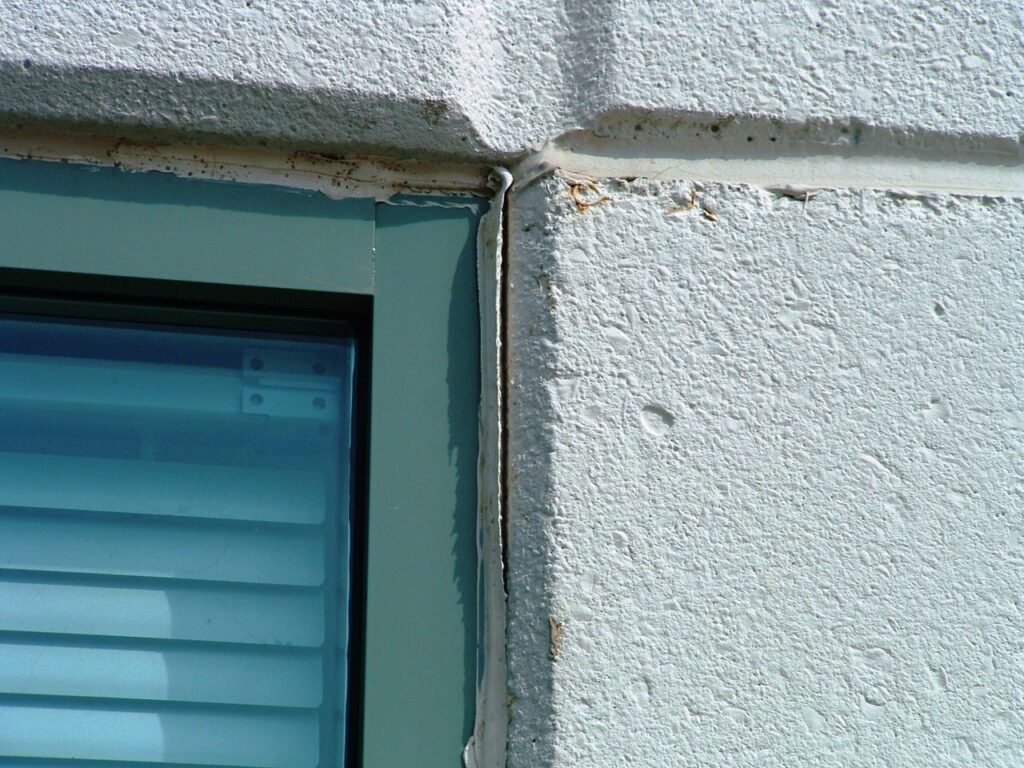
Examples: Failed sealants at a window perimeter are a common condition found on commercial buildings. These are frequent sources of leaks and interior water damage.
The Hidden (and Expensive) Consequences of Water Damage
When failing sealants allow water to penetrate, the problems compound quickly:
- Moisture Infiltration and Mold Growth: Water seeps behind the façade, saturating insulation, drywall, and structural elements. This creates ideal conditions for mold, which poses health risks and can lead to tenant complaints or lawsuits.
- Structural Deterioration: Prolonged exposure weakens masonry (efflorescence, spalling), corrodes rebar in concrete, and rots wood framing. In severe cases, it compromises the building’s integrity.
- Interior Damage: Leaks cause stained ceilings, damaged flooring, and ruined interiors—often requiring disruptive and costly fixes.
- Energy Loss: Gaps from failed sealants let air escape, driving up heating and cooling costs by 10–20% or more.
- Escalating Repair Costs: What starts as a $10,000–$20,000 sealant replacement can balloon to hundreds of thousands if water damage requires masonry reconstruction, concrete repair, or full façade repairs.
We’ve worked on properties where delayed action turned minor sealant issues into $100,000+ emergencies. Proactive maintenance saves money and headaches.
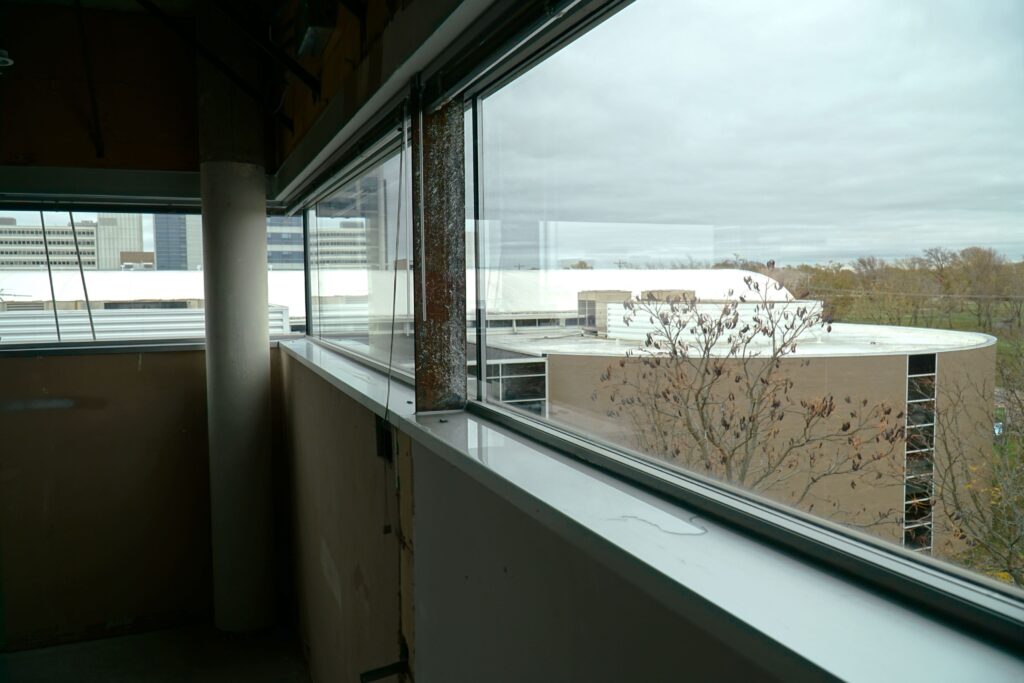
Water stains and mold from sealant-related leaks can lead to extensive interior repairs.
Sealant Replacement Best Practices: How to Prevent Failure
The good news? Most failures are preventable with proper replacement and maintenance. At JS Goray, we adhere to best practices from the Sealant, Waterproofing, and Restoration Institute, with our team members receiving training in SWRI Validated Training programs. Key steps to proper sealant replacement include:
- Thorough Inspection: Trained estimators evaluate exisiting conditions and create the best scope of work for every building.
- Perform Adhesion Test: Our team will conduct an adhesion test to verify the specified material is compatible with your building and determine if primer is required.
- Complete Removal: Using specialized tools, we cut out old sealant to ensure clean substrates.
- Proper Preparation: Clean joints, apply primer if needed, and install backer rod for correct depth (typically half the joint width).
- High-Performance Materials: We exclusively specify high-performance sealants (e.g., UV-resistant, high-adhesion, and high movement capability) for our clients. Ideally suited for Midwest conditions.
- Expert Application: Tool joints for optimal shape (hourglass profile) to maximize movement and adhesion.
- Regular Maintenance: Schedule inspections every 5–10 years, with full replacement as needed.
Protect Your Investment Today
Don’t wait for leaks to signal trouble. Timely sealant replacement extends your building’s life, reduces energy costs, and avoids expensive water damage repairs.
If you’re a property manager or owner in the upper Midwest, contact JS Goray for a façade inspection and consultation. We regularly provide our clients with budgetary proposals for fiscal planning and work with budget constraints.
Schedule Your Free Consultation
Stay warm and dry this winter—reach out today!